
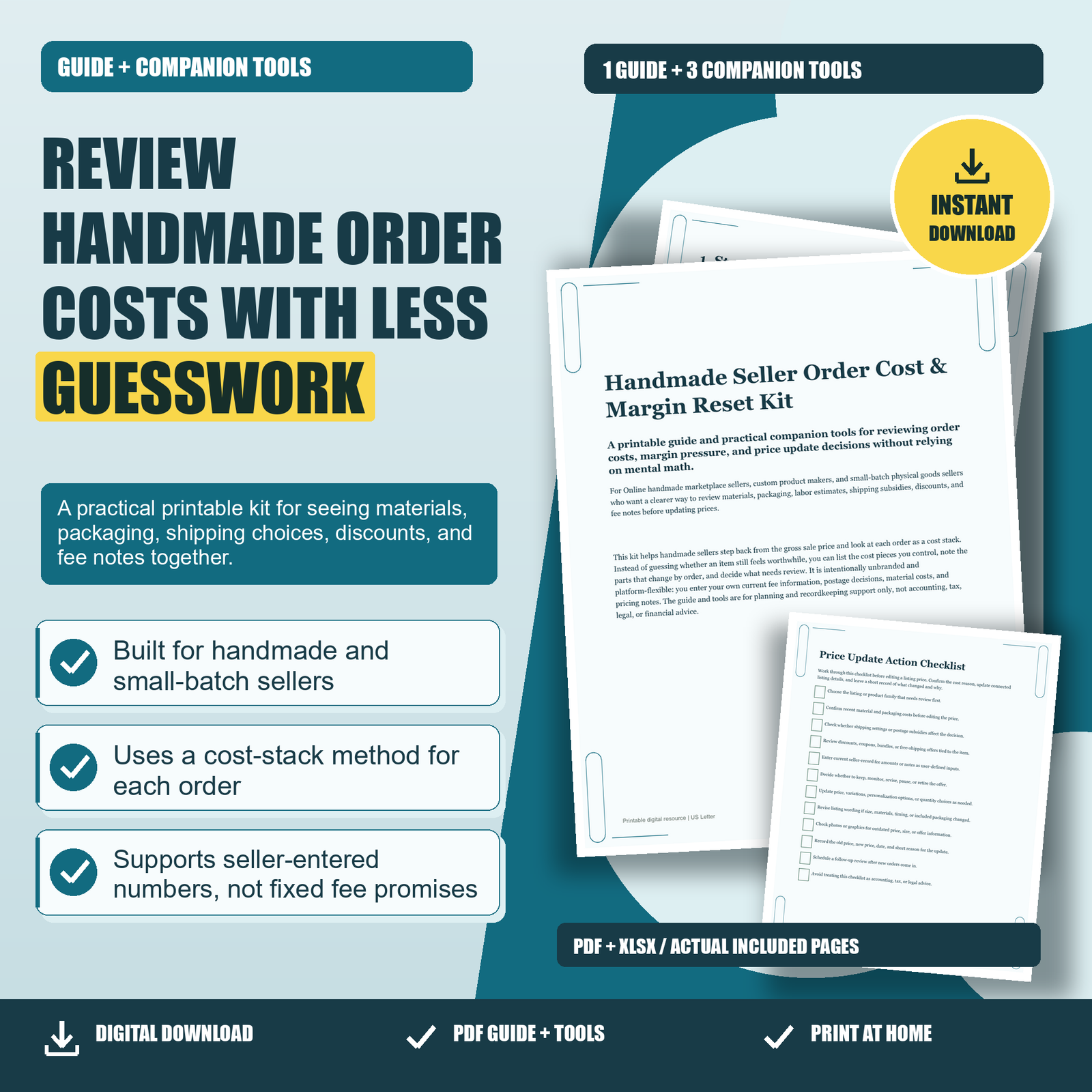
Handmade Seller Order Cost: This kit helps handmade sellers step back from the gross sale price and look at each order as a cost stack. Instead of guessing whether an item still feels worthwhile, you can list the cost pieces you control, note the parts that change by order, and decide what needs review. It is intentionally unbranded and platform-flexible: you enter your own current fee information, postage decisions, material costs, and pricing notes. The guide and tools are for planning and recordkeeping support only, not accounting, tax, legal, or financial advice.
Handmade Seller Order Cost:
1. Start With the Order, Not the Storewide Average
When pricing feels confusing, it is tempting to look at a whole month of sales and ask, “Was that good?” The problem is that handmade orders rarely behave like one neat average. A small ready-to-ship item, a personalized gift, a heavy bundle, and a discounted repeat order can all have very different cost stacks. Start with one real order or one common product type. Write down the actual sale price, what the buyer paid for shipping if applicable, any discount you offered, and the physical item you had to make, pack, and send.
2. Build a Cost Stack You Can Actually Maintain
A useful cost stack is detailed enough to catch missing costs but simple enough that you will use it again. Start with categories that directly change when an order happens: materials, packaging, shipping-related costs, discounts, and fee notes. Then add a labor estimate as a planning line if it helps you compare orders. Labor can be hard to price perfectly, especially for creative work, but ignoring it completely can make busy products look better than they feel.
3. Keep Fee Notes Current Without Hard-Coding Assumptions
Marketplace and payment processing fees can vary by country, transaction type, currency, shipping charged, taxes collected, advertising choices, and platform policy changes. Because of that, this kit does not hard-code fee formulas or promise that one percentage fits every seller. Instead, it gives you a place to enter your own current fee estimate or note the fee amount from an actual order record. That keeps the review useful even when rules change.
4. Use Margin Review to Sort Decisions, Not Judge Yourself
Margin review is not about proving that every past price was wrong. It is a calm decision step. After you build an order cost stack, use the Margin Review Worksheet to compare what happened with what you expected. Write the product or order type, the price reviewed, the cost concern, the action you are considering, and the next check date. This turns vague worry into a short list of choices.
5. Update Prices Carefully and Communicate Clearly
Once you identify a listing that needs a price change, resist the urge to update everything in one rushed sitting. Start with the products that show the clearest cost pressure or the highest repeat volume. Use the Price Update Action Checklist to move through the steps: confirm current costs, check the listing price, review shipping settings, update variations if needed, and make sure your product description still matches the offer.
Choose one useful next step. Review the related product details, included formats and license before choosing the tools for your needs.