
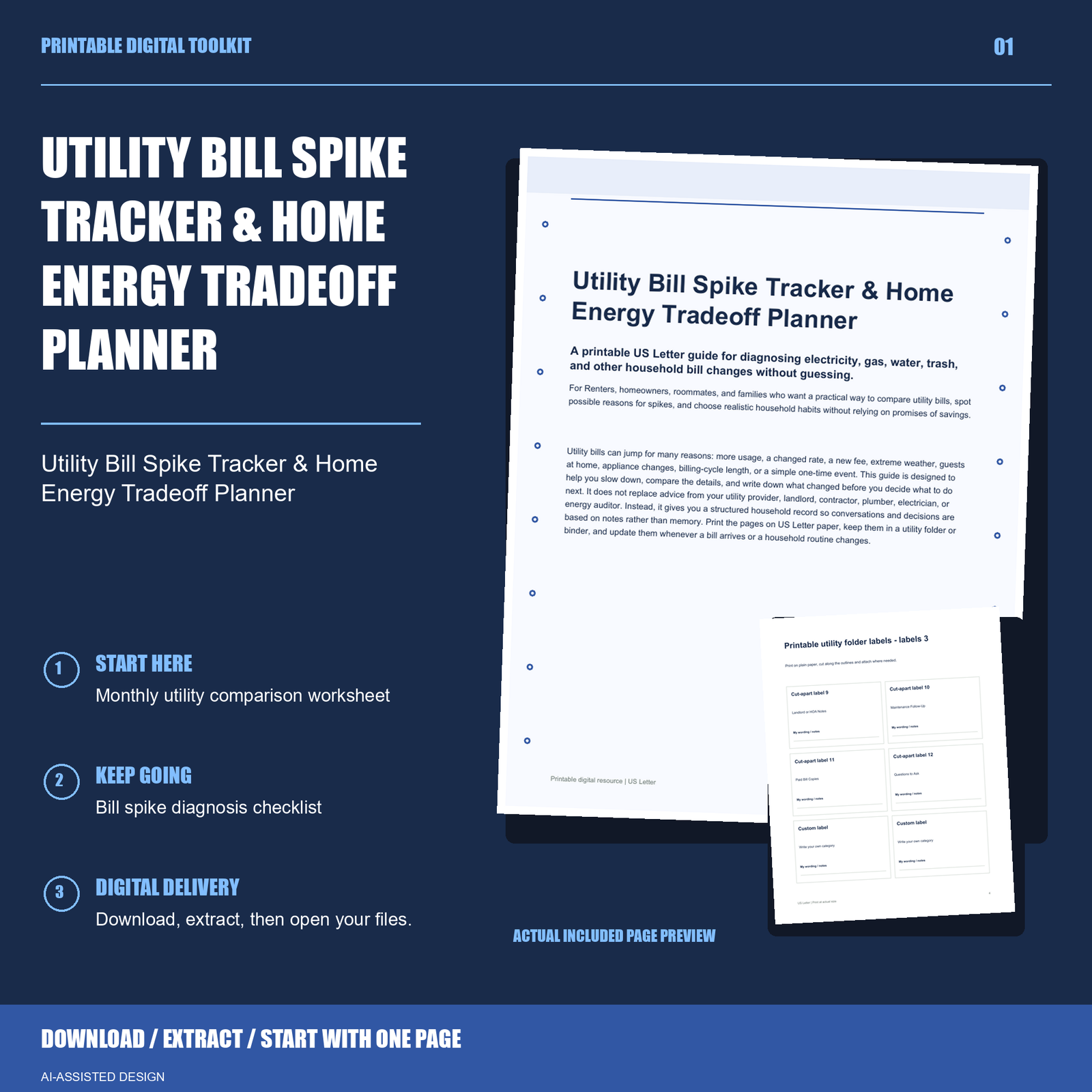
Utility bills can jump for many reasons: more usage, a changed rate, a new fee, extreme weather, guests at home, appliance changes, billing-cycle length, or a simple one-time event. This guide is designed to help you slow down, compare the details, and write down what changed before you decide what to do next. It does not replace advice from your utility provider, landlord, contractor, plumber, electrician, or energy auditor. Instead, it gives you a structured household record so conversations and decisions are based on notes rather than memory. Print the pages on US Letter paper, keep them in a utility folder or binder, and update them whenever a bill arrives or a household routine changes.
1. Start With the Bill, Not the Panic
A utility spike feels personal because it arrives as a dollar amount, but the first step is to separate the amount due from the cause. Before changing every household routine, pull the current bill and the previous bill for the same utility. Look for billing period dates, number of days billed, usage units, rates, fees, taxes, adjustments, and any messages printed by the provider. A bill covering 35 days may look worse than a bill covering 28 days even if daily use did not change much. A bill can also rise because of a delivery charge, service fee, fuel adjustment, waste surcharge, estimated reading, or corrected meter reading.
Use the Monthly utility comparison worksheet to make this review consistent. Write down the utility type, last month’s total, this month’s total, and the first thing that appears different. Example: “Electric: total increased, kWh increased, billing period had 4 more days, thermostat used more during heat wave.” Avoid jumping to conclusions from one number. Your goal is not to prove anyone is at fault; it is to create a short list of possible explanations. If a bill contains unfamiliar language, mark it for follow-up with the provider or lease documents rather than guessing.
2. Separate Usage Changes From Rate and Fee Changes
A higher bill does not always mean your household used more. Many utility bills combine usage-based charges with fixed charges, delivery charges, fees, taxes, municipal charges, late charges, deposits, trash cart fees, minimum service charges, or seasonal rate structures. If your bill shows both usage and cost, compare both. If usage stayed similar but the total rose, look harder at rates and fees. If usage rose but rates stayed the same, look for behavior, weather, equipment, guests, leaks, or seasonal patterns. If both changed, record both so you do not over-focus on only one explanation.
Use the Rate/fee change log whenever you notice a new line item, changed rate, or provider notice. Write the effective date, the exact phrase used on the bill, and where you saw it. Example: “Water bill, June statement: new stormwater fee listed under city charges.” This log is especially helpful for renters and shared households because it keeps the discussion specific. Instead of saying, “The bill is crazy,” you can say, “Usage was close to last month, but the base charge and sanitation fee changed.” That kind of note makes it easier to ask clear questions.
3. Account for Weather, Seasons, and Household Rhythm
Seasonality is one of the easiest explanations to forget because it feels normal while it is happening. Hot weeks may increase cooling use, cold nights may affect heating use, rainy seasons can change laundry and drying routines, and summer schedules may mean more showers, cooking, devices, and people at home. Water use may change with gardening, visitors, school breaks, pet washing, or a slow leak. Trash service may change after holidays, decluttering, moving, or extra yard waste. None of these automatically explains a spike, but each belongs on your notes page.
The Seasonal usage notes page is for capturing context while it is still fresh. Write simple observations such as “two weeks of overnight freezing,” “adult working from home full-time,” “laundry increased after sports season started,” or “guest stayed 10 days.” Also note thermostat settings if you use heating or cooling, but do not use unsafe settings or disable necessary climate control. Comfort, health, lease requirements, pets, humidity, frozen-pipe prevention, and appliance instructions matter. The planner helps you compare tradeoffs; it is not a command to sacrifice safety, sanitation, or reasonable comfort.
4. Diagnose the Spike With a Household Walkthrough
Once the bill review shows a possible usage change, do a calm household walkthrough. Start with the utility that spiked. For electricity, look for high-use devices that ran more often than usual: heating or cooling equipment, space heaters used according to manufacturer instructions, dehumidifiers, fans, electric ovens, dryers, gaming systems, extra refrigerators, or holiday lighting. For gas, note heating, water heating, cooking patterns, fireplaces, or longer hot-water use. For water, check toilets, faucets, irrigation, showers, hose bibs, washing machine use, and any unusually damp areas. For trash, note service level, pickup changes, extra bins, bulky items, or holiday waste.
Use the Bill spike diagnosis checklist as a structured walkthrough rather than relying on memory. If you rent, stay within what you are allowed to inspect and report maintenance concerns through the proper channel. Do not open panels, alter wiring, bypass safety controls, or attempt repairs that should be handled by a qualified person. Your best output is a clear note: what you observed, when it started, and whether it lines up with the bill period. Example: “Water bill rose; upstairs toilet handle has been sticking for several weeks; reported to landlord on Tuesday.”
5. Choose Tradeoffs That Fit Your Home
A tradeoff planner works best when it respects real life. A family with small children, shift workers, medical equipment, pets, or remote work needs different routines than a single person who travels often. Instead of making broad rules like “never use the dryer” or “keep the house uncomfortable,” choose a few habits that are practical and safe. Examples include running full laundry loads when possible, turning off unused lights, checking that doors and windows are closed before heating or cooling, reporting leaks promptly, and reviewing bills on the same day each month.
The Household energy habit prompt cards are designed for visible reminders, not blame. Place a card near the laundry area, thermostat, entry door, sink, or family command center. Rotate them weekly so the reminders do not become invisible clutter. When discussing habits with roommates or family, use neutral language: “Let’s test this for one billing cycle and see what the bill details show.” Avoid promising a specific result. The benefit of a planner is better awareness and records; actual bill outcomes depend on provider rates, climate, home condition, appliances, household needs, and many other variables.
Choose one useful next step. Review the related product details, included formats and license before choosing the tools for your needs.