
A higher utility bill is a reason to compare the details, not proof that one appliance or habit caused the increase. Start by putting the current bill beside an earlier bill and separating what you know from what still needs checking. A written record can help you ask clearer questions and keep track of the next step.
Compare the same details on both bills
Record the start and end dates of each billing period, the service being billed and the units shown on the bill. Check whether the number of billed days differs. Comparing two totals without noticing different billing periods can make it harder to understand what changed.
Write usage and charges in separate columns. A change in the amount due can involve usage, a rate change, a fee, a credit or an adjustment. Use the wording on your own bill rather than assuming that every increase means higher consumption.
Mark questions before choosing an explanation
Note whether the bill identifies the meter reading as actual or estimated. Check for an adjustment or balance carried forward. If a charge or reading is unclear, copy the label and prepare a specific question for the utility provider.
You do not need to settle every question immediately. Keep a short list of facts to confirm, who you need to contact and when you plan to follow up. Avoid turning an unexplained difference into a firm conclusion before you have the supporting information.
Keep a small household change log
List changes you already know about, such as more people at home, a different routine or a different billing period. Keep observations separate from guesses. The log is a place to organize information; it does not establish which change caused the bill to rise.
For a practical first pass, choose one observation to track and one question to resolve. Date the note so that you can compare it with a later bill rather than relying on memory.
Write down tradeoffs before making a plan
A household choice may involve comfort, accessibility, time, upfront cost and other needs as well as the bill. Record the option you are considering, the information you still need and a review date. Choose a manageable next action instead of changing several things at once.
A planning worksheet cannot promise a saving or replace the provider’s explanation of a charge. Leave technical work on electrical, heating or gas equipment to an appropriately qualified professional.
Use the tracker as a manual record
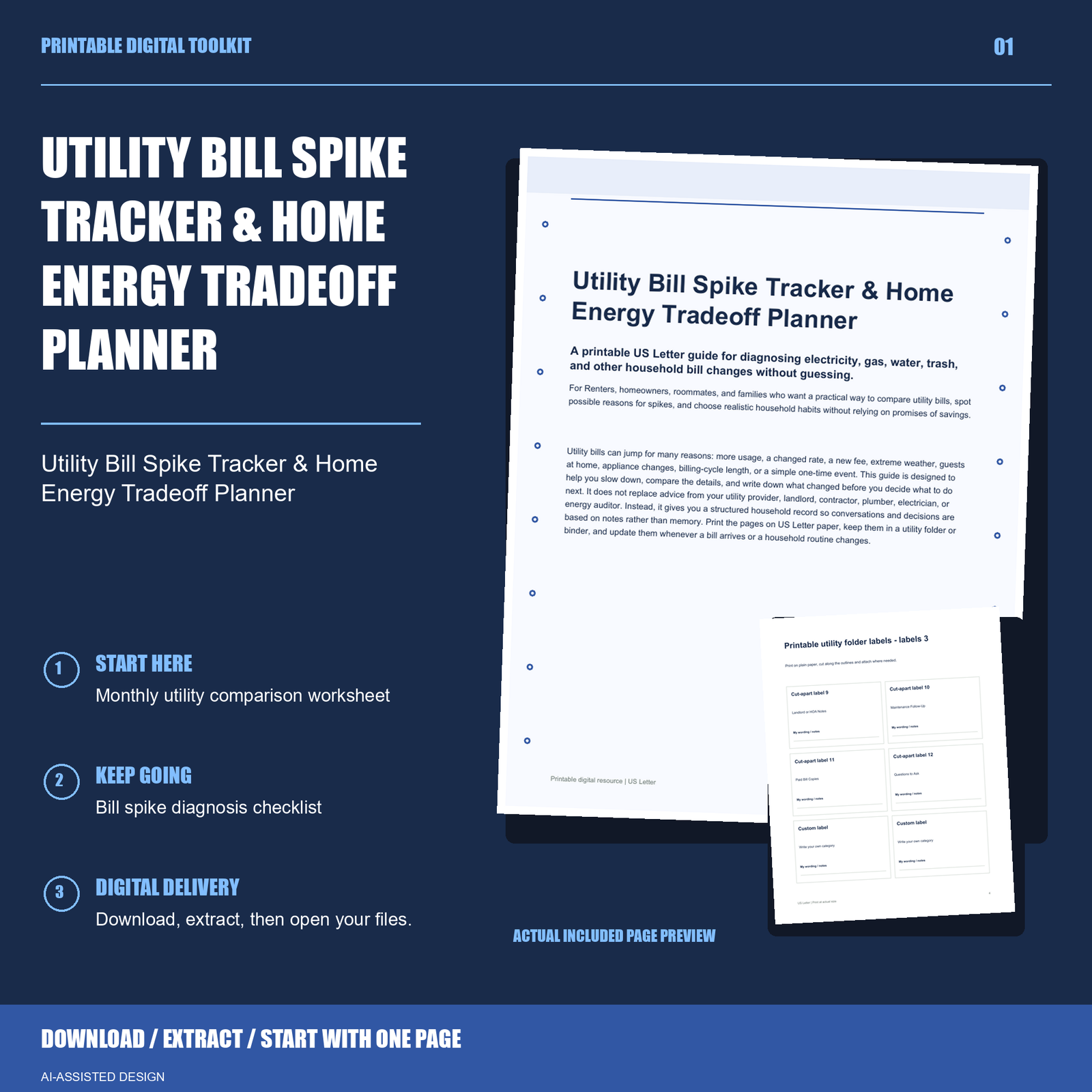
The Utility Bill Spike Tracker & Home Energy Tradeoff Planner provides printable planning pages and manual spreadsheet files for organizing your own information. Enter figures yourself and check your work against the bills. Do not treat a table or filename containing the word calculator as a promise of automatic formulas.
Start with one comparison sheet, record the dates and figures you can verify, then note a single follow-up action. Read the included instructions and license before editing, printing or sharing any file. Check the current product listing for the exact included files and permitted use.
The useful outcome of a first review is a clearer record: what changed, what remains uncertain and what you will check next. Keep that record with the relevant bills so that your next comparison starts from evidence rather than a remembered total.