A printable planner can be a place to put the next step, without becoming another large project. You do not have to fill every page or build a complete routine before using a worksheet. Start with the task or commitment that needs your attention today.
Choose a page for the situation
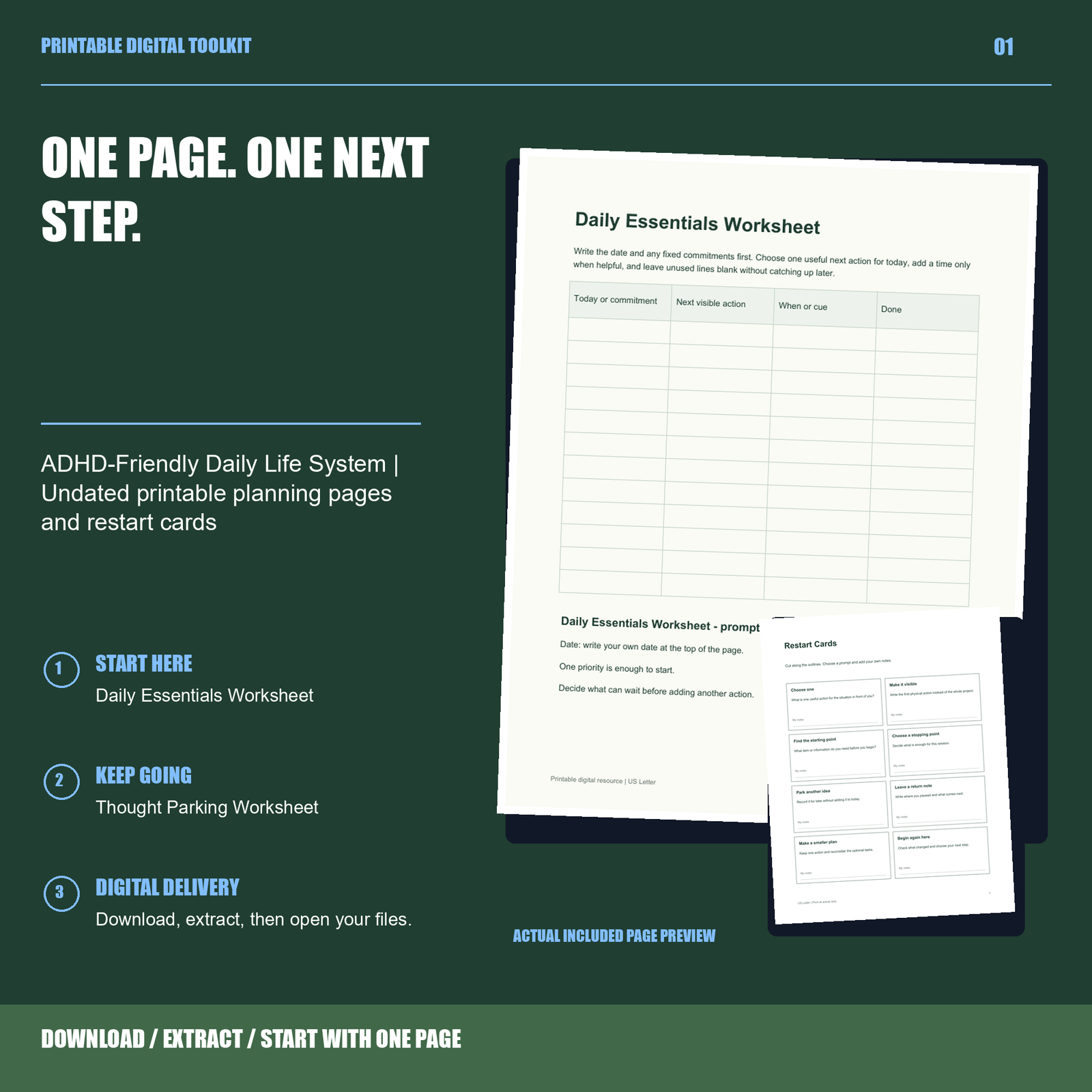
Look at the page headings before printing a whole kit. A daily worksheet, a place to park thoughts and a task-breakdown page serve different purposes. Choose the page that matches what you want to record. Leave the others for another time.
Write the date if it helps you find the page later. An undated printable lets you decide when to use it; it does not require you to account for every unused day.
Make the next action concrete
Instead of writing a broad project name alone, add an action you can recognize when it is done. For example, “sort the papers on the kitchen counter into three piles” is more specific than “organize the house.” The page is a place for your own choices, rather than a requirement to follow someone else’s full schedule.
If a task has several parts, put those steps on a separate worksheet. Keep the daily page focused on the part you intend to do next. You can change that decision as the day changes.
Give other thoughts somewhere to go
An unrelated reminder does not have to replace the item you were working on. A thought-parking page gives you somewhere to write it down and return to it later. Decide for yourself when to review that page. No app, notification or automatic reminder is involved.
Start again without completing every blank
A partially used page can still contain useful notes. You can keep it, start a fresh page or move one unfinished item forward. Reflection prompts and restart cards are optional resources, not a test you must complete.
Check the files before choosing a kit
The ADHD-Friendly Daily Life System includes nine printable US Letter PDF files totaling 18 pages: an eight-page guide and eight companion resources. It also includes text instructions and a personal/household license. The PDFs are for printing and handwriting, not interactive fillable forms. A PDF reader and access to a printer are required; editable spreadsheets and presentations are not included.
The product’s ADHD-friendly description refers to its design approach. These planning materials are not medical advice, diagnosis or treatment, and no health outcome is promised. Review the actual-page previews and choose tools according to your own needs.
For help finding an eligible purchased file, see Download guide. Browse the Everyday Planning collection for related resources.