
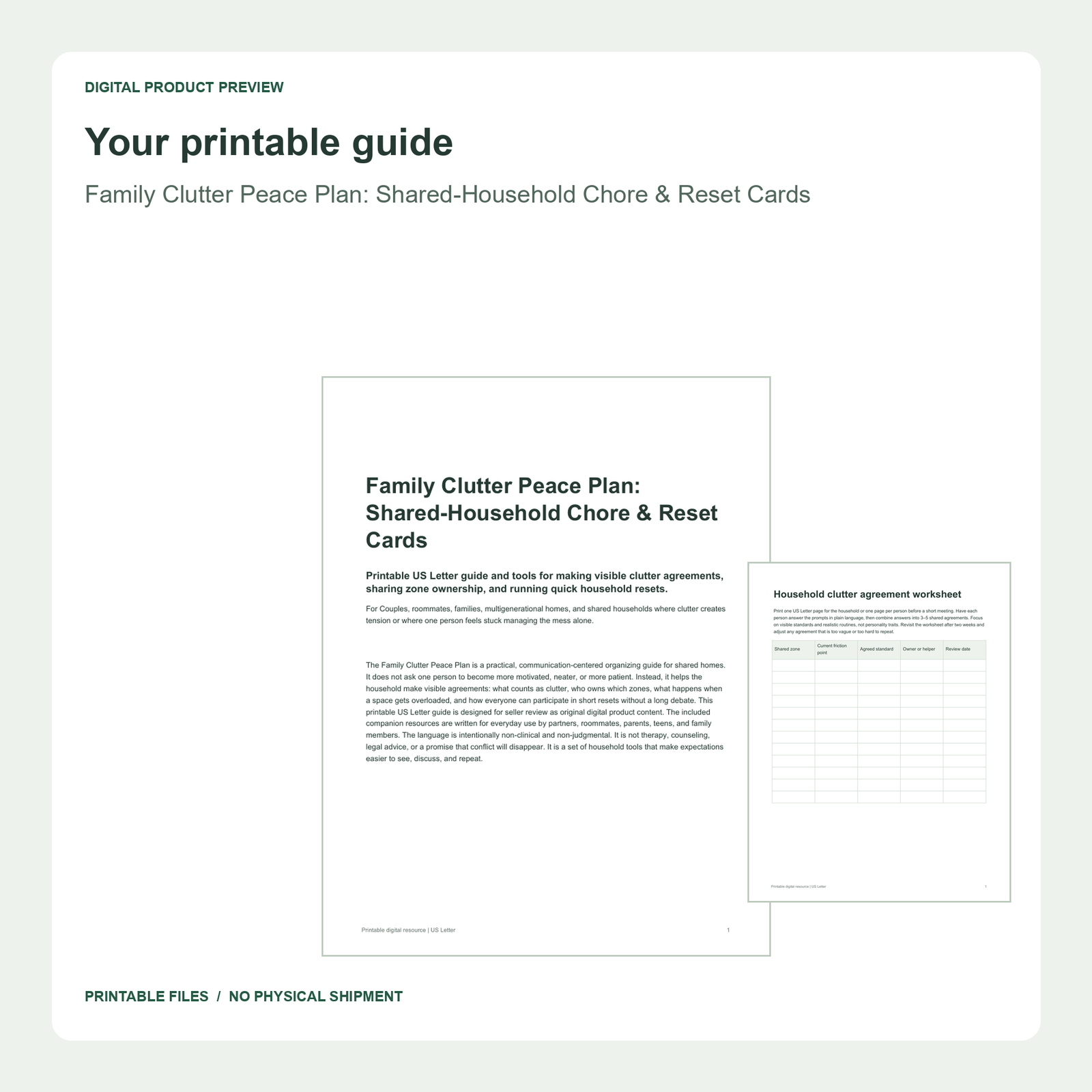
The Family Clutter Peace Plan is a practical, communication-centered organizing guide for shared homes. It does not ask one person to become more motivated, neater, or more patient. Instead, it helps the household make visible agreements: what counts as clutter, who owns which zones, what happens when a space gets overloaded, and how everyone can participate in short resets without a long debate. This printable US Letter guide is designed for seller review as original digital product content. The included companion resources are written for everyday use by partners, roommates, parents, teens, and family members. The language is intentionally non-clinical and non-judgmental. It is not therapy, counseling, legal advice, or a promise that conflict will disappear. It is a set of household tools that make expectations easier to see, discuss, and repeat.
1. Start With a Shared Definition of “Clutter”
In many homes, clutter arguments happen because people are using the same word to mean different things. One person may see a kitchen counter with mail, keys, water bottles, and school papers as “normal daily life.” Another person may see the same counter as a sign that the house is out of control. Before assigning chores or buying storage containers, the household needs a plain-language definition of what clutter means in each shared space. Keep this conversation practical. Instead of saying, “You always leave things everywhere,” try, “For the counter, I want enough clear space to prep dinner and set down groceries.” That turns the issue from a character judgment into a visible standard.
Use zones rather than personalities. A useful clutter definition includes three details: what belongs in the space, what does not belong there overnight, and what “reset” means. For example, an entryway standard might be: “Shoes go on the rack, daily bags go on hooks, packages move to the owner’s room or the donation bin within two days, and the floor stays clear enough for everyone to walk through.” This kind of wording works for roommates, families, and couples because it focuses on the space. The Household clutter agreement worksheet in this guide gives everyone a place to write what matters most, what feels realistic, and what minimum standard the household can actually maintain. Aim for an agreement that people can repeat on an ordinary Tuesday, not a perfect-home standard that only works after a major cleaning day.
2. Replace Invisible Labor With Visible Zone Ownership
Shared clutter often builds when responsibility is assumed instead of assigned. One person notices the full donation bag, the shoes by the door, the bathroom counter pile, and the mail stack. Other people may be willing to help, but they do not see the same tasks at the same time. Zone ownership turns “someone should handle this” into a visible agreement. A zone owner is not a servant and is not responsible for everyone’s behavior. The owner is the person who checks that area, starts the reset when needed, and asks for specific help. This lowers the mental load because the same person does not have to monitor every surface in the home.
Begin with the zones that create the most friction: kitchen counters, entryway, living room, bathroom sink, dining table, laundry landing area, shared desk, pantry, car drop zone, or kids’ backpack area. Then decide what ownership means. For example, the entryway owner might do a two-minute scan each evening, place stray items in a small “return basket,” and remind owners to collect their belongings before bed. The bathroom owner might clear empty containers, restock hand soap, and start a weekend wipe-down. Rotate zones if that feels fair, or assign zones based on schedule and use. The Zone-owner chart makes the agreement visible so the household can stop relying on memory, hints, or frustration. Revisit the chart monthly because schedules, school terms, work shifts, and household needs change.
3. Use 10-Minute Resets Instead of Marathon Cleanups
A 10-minute reset is not a deep clean. It is a fast return to usable function. The goal is to make a shared zone easier to live in right now: clear the counter enough to cook, reset the couch enough to sit down, clear the bathroom sink enough for the next person, or restore the entryway enough to leave in the morning without stepping over bags. This matters because clutter tension often spikes when a space blocks normal routines. A short reset is less intimidating than a full cleaning session and easier for more household members to join.
Set a timer, choose one reset card, and stop when the timer ends. If the job is not finished, make one next-step note instead of turning it into an all-night project. For example: “Mail stack sorted into owner piles; taxes folder still needs review,” or “Counter cleared; appliance cabinet needs a weekend decision.” In shared homes, stopping on time builds trust. People are more likely to participate again when a reset does not expand without warning. The 10-minute reset cards in this plan give specific, named actions for common clutter zones. Use them after dinner, before guests arrive, before trash day, on Sunday evening, or whenever a space starts causing repeated comments. The point is not perfection. The point is a predictable way to recover the room without blaming one person.
4. Make Counters, Donation Bins, and Drop Zones Self-Explaining
Signs are useful when they reduce repeated verbal reminders. A sign should not sound like a scolding note taped to a cabinet. It should answer the question, “What happens here?” For example, a countertop sign might say, “Counter Reset: Food prep space stays clear. Mail goes to the tray. Cups go to the sink. Personal items return by bedtime.” That message is short, specific, and attached to the space where the behavior happens. Signs work best when the household agrees on them first. If a sign appears without a conversation, it may feel like one person is policing the others.
Donation bins also need rules. Without rules, the bin can become a guilt pile, a storage pile, or a place where unwanted items sit for months. A good donation-bin sign says what belongs, what does not belong, who empties it, and when it leaves the home. For example: “Clean, usable items only. No trash, broken electronics, food, or personal keepsakes without owner approval. When full, the zone owner schedules the drop-off.” This prevents accidental disposal of someone else’s belongings and keeps the bin from becoming another clutter zone. The Countertop clutter sign templates and Donation-bin rules sign resources are written as editable PPTX planning/sign pages with matching PDF versions, so the seller can prepare printable pages with household-friendly wording and simple visual hierarchy.
5. Hold Short Household Meetings That End With Decisions
A household meeting does not need to be formal, emotional, or long. In this plan, a meeting is a short reset conversation with one purpose: decide what will happen next in the shared home. Keep it to 10–20 minutes when possible. Choose a low-stress time, such as after lunch on Sunday or before a weekly grocery run, not while someone is rushing out the door. Start with one appreciation or one thing working well. Then choose one clutter zone to discuss. This keeps the conversation from turning into a list of every unresolved household frustration.
Use specific prompts instead of open-ended blame. A helpful prompt is, “Which surface caused the most friction this week, and what would make it easier by next week?” Another is, “What item category keeps landing in the wrong place?” Write down decisions immediately: who owns the zone, what the reset standard is, when the reset happens, and what support is needed. If no one agrees, choose a one-week experiment instead of forcing a permanent rule. For example, “For one week, all mail goes into the entry tray, and each person clears their own mail on Friday.” The Family meeting prompt cards provide cut-apart prompts that keep the conversation focused on household systems rather than personal criticism. The goal is to leave with one clear action, not to solve every habit at once.
Choose one useful next step. Review the related product details, included formats and license before choosing the tools for your needs.