
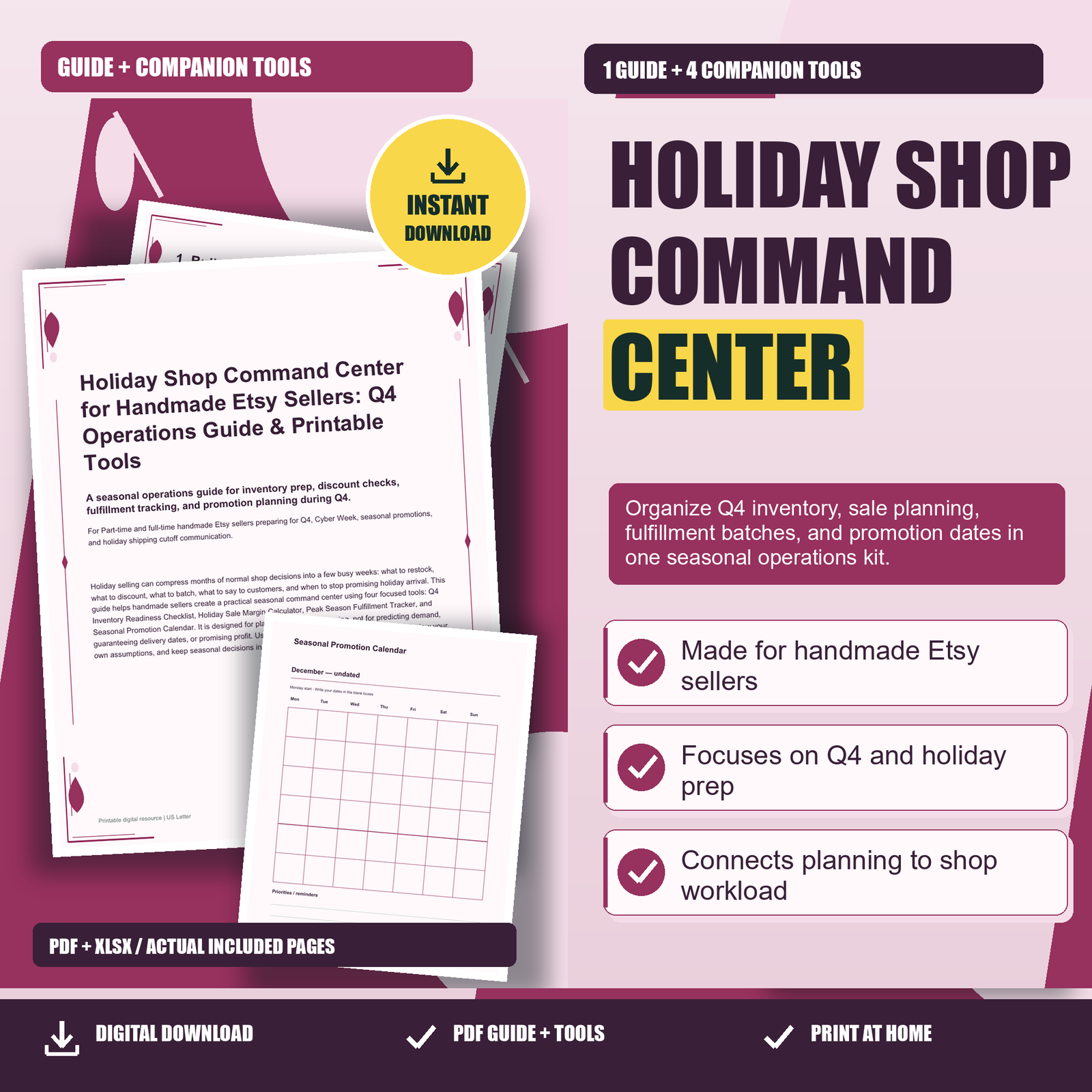
Holiday Shop Command Center for Handmade Etsy: Holiday selling can compress months of normal shop decisions into a few busy weeks: what to restock, what to discount, what to batch, what to say to customers, and when to stop promising holiday arrival. This guide helps handmade sellers create a practical seasonal command center using four focused tools: Q4 Inventory Readiness Checklist, Holiday Sale Margin Calculator, Peak Season Fulfillment Tracker, and Seasonal Promotion Calendar. It is designed for planning and recordkeeping, not for predicting demand, guaranteeing delivery dates, or promising profit. Use it to make your holiday shop work visible, review your own assumptions, and keep seasonal decisions in one printable place.
Holiday Shop Command Center for Handmade Etsy:
1. Build Your Holiday Command Center Before the Rush
A strong holiday season plan starts before the order queue is full. Your command center does not need to be complicated; it simply needs to gather the decisions you will repeat often. Choose one place for your seasonal pages, whether that is a printed folder, a clipboard near your packing table, or a binder beside your shipping supplies. Add your Q4 Inventory Readiness Checklist first, because it helps you see what must be counted, ordered, photographed, bundled, or retired before promotions begin. Then keep the Holiday Sale Margin Calculator nearby for quick cost visibility when you are tempted to run a discount. The Peak Season Fulfillment Tracker belongs where you pack orders, while the Seasonal Promotion Calendar belongs where you plan launches and customer messages.
2. Prepare Inventory Around Your Real Capacity
Holiday inventory planning is not just counting finished products. Handmade sellers also need to count components, packaging, labels, inserts, tools, and the time required to turn materials into ready-to-ship items. Use the Q4 Inventory Readiness Checklist to move through the shop in layers. First, list your best seasonal candidates: proven giftable items, repeatable products, fast-to-pack listings, and supplies you can confidently replenish. Next, identify items that look appealing but create production bottlenecks, such as made-to-order designs with long curing, drying, personalization, or sourcing windows. A holiday bestseller can still become a problem if every order requires a slow custom step.
3. Check Sale Ideas Before You Discount
Holiday promotions can feel urgent, especially around Cyber Week, but a discount should be reviewed before it goes live. The Holiday Sale Margin Calculator is intentionally simple: it supports item, quantity, unit cost, line cost, and total using quantity times unit cost. Use it to make cost components visible before you decide whether a sale makes sense. For example, you might enter rows for product materials, gift box, mailer, ribbon, label stock, thank-you card, and any other shop-specific cost you want to consider. The calculator will not decide your price, calculate taxes, predict profit, or account for every platform fee automatically; it simply helps you see the cost stack you are using for a sale decision.
4. Track Fulfillment in Batches, Not Panic Piles
During peak season, individual orders can blur together. A fulfillment tracker helps you turn a pile of tasks into visible batches. Use the Peak Season Fulfillment Tracker to group work by order batch, due date, processing stage, or shipping method. For example, you might create a Monday batch for ready-to-ship ornaments, a Tuesday batch for personalized mugs, and a Wednesday batch for gift wrap upgrades. Record the batch name, order count, next action, and status so you can see what needs printing, making, packing, messaging, or carrier drop-off. This is especially useful if you have a helper, because the tracker gives both of you a shared view of what has been started and what is actually complete.
5. Plan Promotions and Customer Messages Together
Holiday marketing works best when promotion dates and operational limits are planned in the same place. The Seasonal Promotion Calendar gives you twelve undated Monday-start months so you can map launch dates, sale windows, cutoff reminders, shop announcement updates, and production breaks without tying the tool to one specific year. Use it to see the relationship between your public promises and your private workload. If a discount begins on Friday, note when inventory should be counted, photos should be checked, listings should be updated, and messages should be prepared. A sale date without preparation tasks can quickly become a scramble.
Choose one useful next step. Review the related product details, included formats and license before choosing the tools for your needs.