
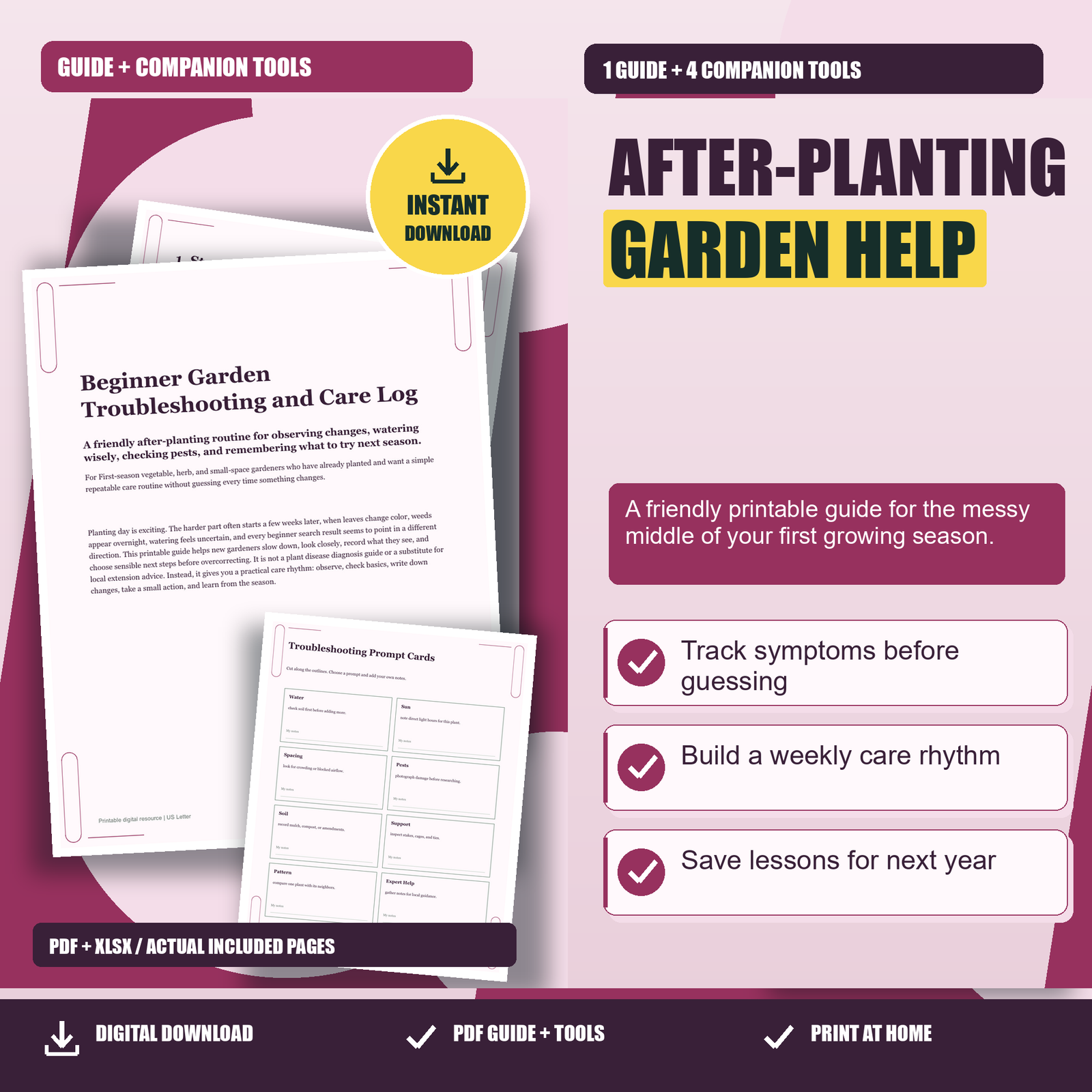
Beginner Garden Troubleshooting and Care Log: Planting day is exciting. The harder part often starts a few weeks later, when leaves change color, weeds appear overnight, watering feels uncertain, and every beginner search result seems to point in a different direction. This printable guide helps new gardeners slow down, look closely, record what they see, and choose sensible next steps before overcorrecting. It is not a plant disease diagnosis guide or a substitute for local extension advice. Instead, it gives you a practical care rhythm: observe, check basics, write down changes, take a small action, and learn from the season.
Beginner Garden Troubleshooting and Care Log:
1. Start With Observation, Not Panic
A new garden changes constantly. Some changes are normal growth, some are weather stress, and some may need attention. The beginner mistake is often reacting too quickly: watering again because leaves droop at noon, spraying because one leaf has holes, or pulling a plant because it looks different from yesterday. Your first job is to observe before deciding. Walk through the garden at roughly the same time of day when possible. Look at leaves, stems, soil surface, nearby weeds, supports, and new growth. Take a quick photo if something looks unusual so you can compare it later.
2. Build a Weekly Garden Reset
Daily garden care can feel like too much for a beginner, especially when life gets busy. A weekly reset gives you a reliable minimum routine. Choose one day that usually works, such as Sunday evening or Wednesday morning. Bring your checklist, a pencil, a small bucket for weeds or debris, and your phone for photos. Move slowly from one end of the garden to the other instead of jumping between problems. The goal is not to make everything perfect; it is to notice what changed and keep small issues from becoming confusing later.
3. Water by Checking Soil First
Watering is one of the most common beginner worries because symptoms can look similar. A thirsty plant, a waterlogged plant, a hot afternoon plant, and a recently transplanted plant can all look droopy. Instead of watering on emotion, check the soil first. Press a finger into the soil near the root zone, use a small trowel to look below the surface, or lift containers to feel their weight. The surface may look dry even when deeper soil is moist. Record what you find in your log when a plant seems stressed.
4. Check Pests and Damage Without Guessing
Seeing holes, spots, sticky residue, or chewed edges can make a new gardener feel behind. Before searching for a cure, gather better information. Look at the top and underside of leaves, stems, new growth, flowers, soil surface, and nearby plants. Notice whether damage is on one plant or many. Photograph the pattern, not just one leaf. If you see insects, photograph them before removing anything. Many gardens include both pests and helpful insects, so avoid assuming every bug is the problem.
5. Clean Up Small Problems Before They Pile Up
Garden care is easier when cleanup happens in small sessions. Weeds compete for water and nutrients, fallen fruit can attract pests, broken stems may invite further damage, and loose ties can let plants flop after wind. During your weekly reset, remove small weeds while the roots are still manageable. Pick up fallen leaves or produce that clearly does not belong on the bed surface. Re-tie supports gently as plants grow. Check trellises, cages, stakes, and container positions after storms or strong heat.
Choose one useful next step. Review the related product details, included formats and license before choosing the tools for your needs.