
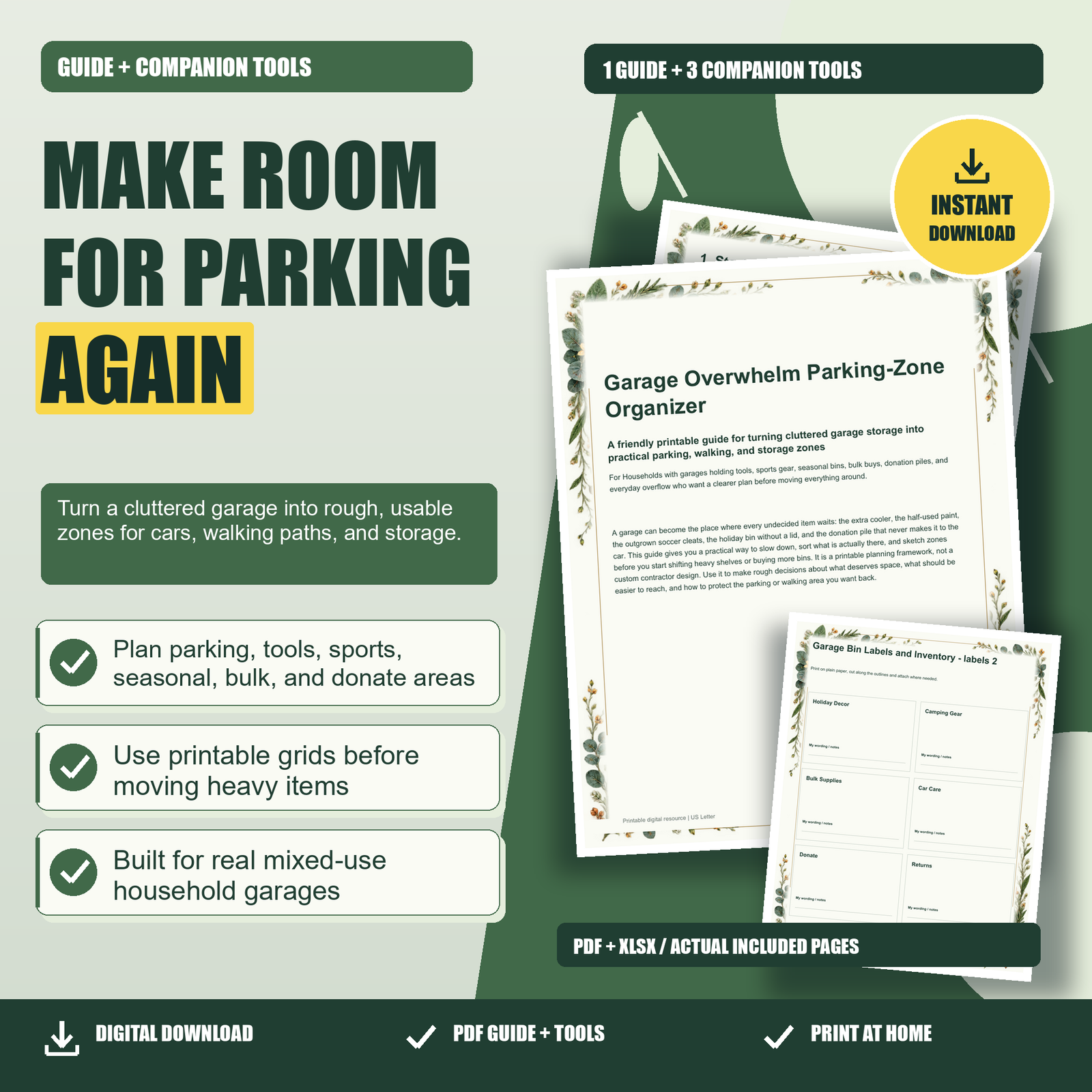
Garage Overwhelm Parking-Zone Organizer: A garage can become the place where every undecided item waits: the extra cooler, the half-used paint, the outgrown soccer cleats, the holiday bin without a lid, and the donation pile that never makes it to the car. This guide gives you a practical way to slow down, sort what is actually there, and sketch zones before you start shifting heavy shelves or buying more bins. It is a printable planning framework, not a custom contractor design. Use it to make rough decisions about what deserves space, what should be easier to reach, and how to protect the parking or walking area you want back.
Garage Overwhelm Parking-Zone Organizer:
1. Start With the Parking Goal, Not the Pile
The fastest way to feel defeated in a garage is to begin by staring at every object at once. Instead, start with the space you want to reclaim. For some households, the goal is fitting one car back inside. For others, it is a safe walkway from the house door to the freezer, room to open car doors, or a clear landing zone for bikes and sports bags. Write that goal in plain language before sorting: “One parking bay stays open,” “Three-foot walking path to the laundry door,” or “Donation items leave the floor by the end of the month.”
2. Do a Quick Walkthrough Before You Pull Everything Out
Before dragging boxes into the driveway, take a slow walkthrough with a notepad or the Garage Category Sort Worksheet. List the obvious groups you see: hand tools, lawn care, kids’ sports, camping, holiday, cleaning supplies, paint, car care, pet supplies, bulk paper goods, returns, and donations. Do not worry about perfect categories yet. The point is to notice what types of things are competing for the same limited floor and shelf space.
3. Sort by Decision, Not by Container
Many garages are full of containers, but containers do not automatically create order. A bin labeled “miscellaneous” simply hides postponed decisions. When you sort, group items by the next decision they need: keep and use often, keep but store seasonally, repair, return to someone else, donate, sell, recycle, or discard. This keeps the process moving even when categories overlap. A basketball pump could belong with sports; a tire gauge could belong with car care. The real question is where you would naturally look for it later.
4. Build Practical Zones Around How Your Household Moves
Good garage zones match real behavior. If kids enter from the driveway after practice, sports gear needs a lower, reachable zone near that entrance. If the adult who gardens uses the side door, lawn and garden supplies should not require crossing around bicycles and storage bins. If bulk paper goods come home from warehouse shopping, create a shelf or corner where those packages can land without stealing the parking path.
5. Label for Retrieval, Not for Decoration
Labels work best when they answer the question, “Where would I look first?” Avoid clever names that nobody else understands. Use labels such as Holiday Lights, Camping Cookware, Car Wash, Soccer, Hand Tools, Paint Supplies, Donation, or Returns. If a bin holds multiple related items, choose a label broad enough to stay useful but specific enough to prevent dumping. “Outdoor Games” is better than “Summer Stuff” if the bin holds chalk, bubbles, frisbees, and yard toys.
Choose one useful next step. Review the related product details, included formats and license before choosing the tools for your needs.