
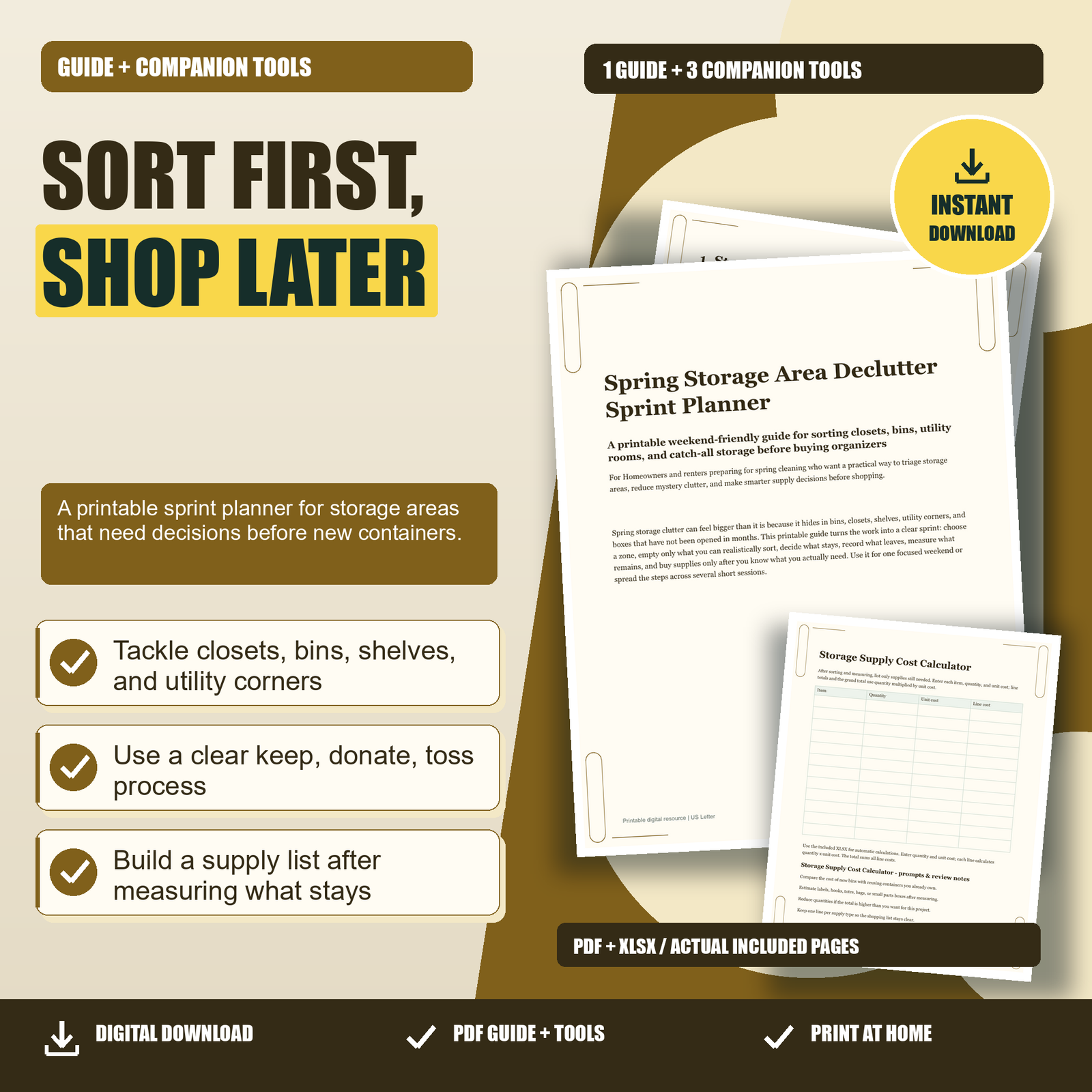
Spring Storage Area Declutter Sprint Planner: Spring storage clutter can feel bigger than it is because it hides in bins, closets, shelves, utility corners, and boxes that have not been opened in months. This printable guide turns the work into a clear sprint: choose a zone, empty only what you can realistically sort, decide what stays, record what leaves, measure what remains, and buy supplies only after you know what you actually need. Use it for one focused weekend or spread the steps across several short sessions.
Spring Storage Area Declutter Sprint Planner:
1. Start With a Storage Sprint, Not a Whole-House Overhaul
A storage-area sprint works because it gives you a defined finish line. Instead of declaring that the whole home must be “spring cleaned,” pick one storage zone and decide what a completed pass will look like. A zone can be one closet, one shelving unit, the laundry-room cabinet, the under-stair area, holiday bins, garage shelves, or the pile beside the utility door. The goal is not perfection. The goal is to make the stored items visible, sorted, counted, and easier to return to later.
2. Set Up a Simple Triage Station
The easiest way to keep a storage project moving is to set up a temporary triage station before you pull everything out. Choose a nearby floor area, table, folding table, hallway section, or blanket where items can land. Make three visible categories: Keep, Donate, and Toss. If your home needs it, add a fourth small area called “Belongs Elsewhere,” but keep that category limited. It is easy to turn decluttering into a wandering delivery route, which drains momentum.
3. Decide What Earns Storage Space
Storage areas often become crowded because everything feels like it might be useful someday. A sprint gives you a practical filter. Start by identifying the role of the space. A linen closet should not become a hardware closet unless that is the only realistic storage option. A utility room should make routine supplies easy to reach. A garage shelf may need separate zones for outdoor gear, tools, seasonal décor, and household overflow. When a space has a job, it becomes easier to choose what belongs there.
4. Count, Measure, and Group Before You Shop
The strongest difference between a storage sprint and a shopping trip is the order of operations. Sort first, count second, measure third, and shop last. After your keep pile is visible, group similar items together. Put extension cords with extension cords, gift wrap with gift wrap, pet supplies with pet supplies, sports gear with sports gear, and seasonal décor by holiday or season. This gives you a realistic picture of volume. You may discover that one large bin is better than four small ones, or that you do not need containers at all because one shelf label and a clearer boundary will solve the problem.
5. Build a Supply List That Matches the Real Project
Once you know what stays and where it will live, use the Storage Supply Cost Calculator to plan only the supplies that support the finished system. Keep the list practical: clear bins, lidded totes, shelf labels, hooks, a broom holder, donation bags, zip pouches, or a small parts box. Avoid vague entries like “organizers” or “storage stuff.” Instead, write the actual item, the quantity, and the unit cost so the calculator can show the line cost and grand total using quantity multiplied by unit cost.
Choose one useful next step. Review the related product details, included formats and license before choosing the tools for your needs.