
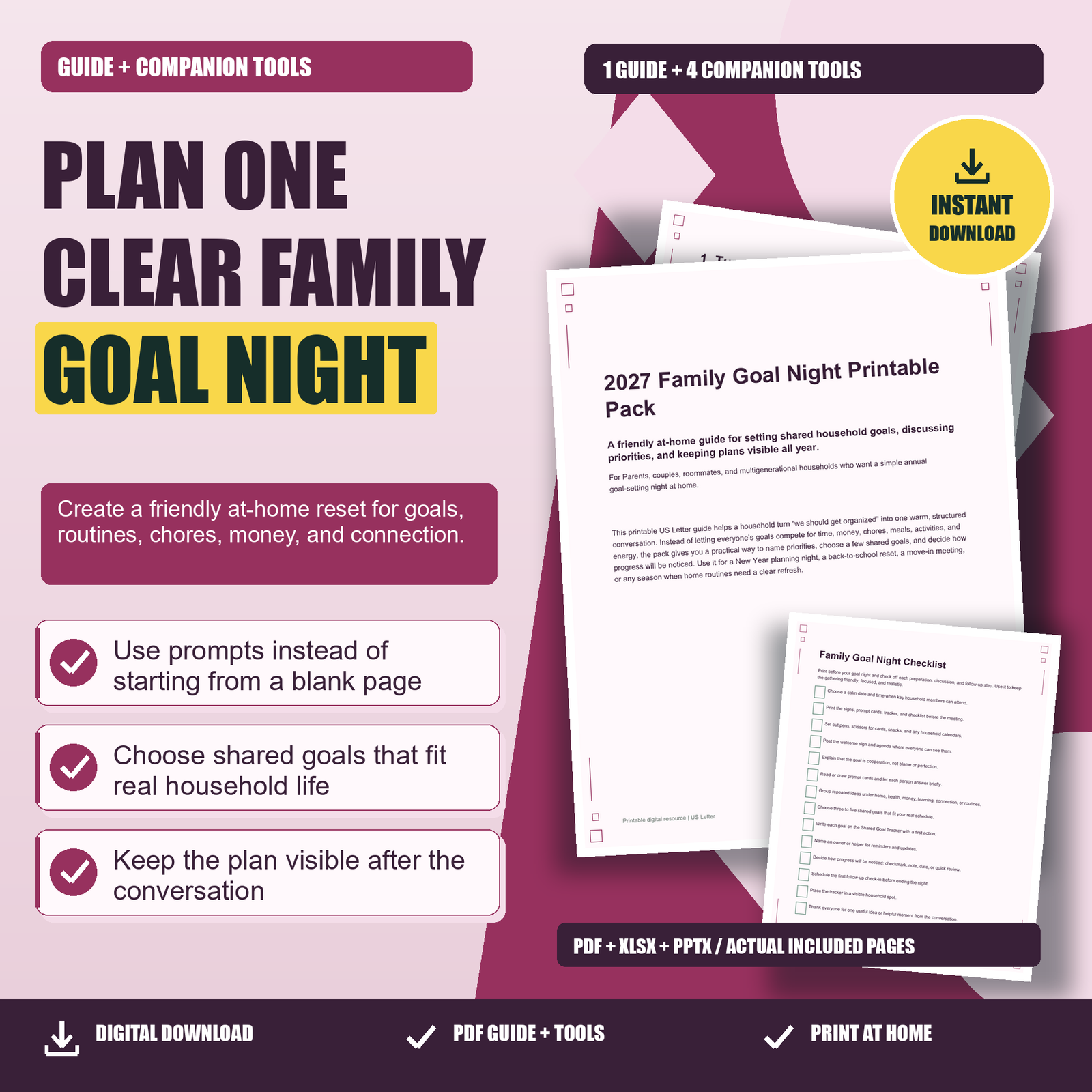
Printably Guides recommends giving the night a simple structure: set a cooperative ground rule, use prompt cards to collect ideas, then choose only three to five shared goals. End by writing one first action, one helper, and one follow-up date so the conversation turns into a visible plan.
1. Turn Goal Setting Into a Household Event
A goal night works best when it feels less like a lecture and more like a planned gathering. Choose a calm evening, keep the schedule short, and treat the conversation as a way to make home life easier for everyone. The purpose is not to solve every issue in one sitting. The purpose is to listen, sort ideas, and agree on a few visible goals that fit the people who actually live in the home. A household goal can be as simple as “cook together twice a month,” “build a calmer morning routine,” or “save for one shared home project.”
Start by naming the tone you want: cooperative, practical, and realistic. If children or teens are involved, explain that everyone can share ideas, but adults may still make final decisions about money, safety, and schedules. If the group is made of roommates, clarify that the goal night is about shared spaces and shared responsibilities, not controlling anyone’s personal life. Put the Family Goal Night Signs in a place people will notice, prepare a small snack or drink, and let the event have a beginning and an end. A visible setup tells everyone, “This matters, and we are doing it together.”
Worked example
Hypothetical household: two adults and two children want calmer mornings, fewer takeout nights, and more time together. They choose three goals: pack bags before bedtime, plan two dinners before shopping, and hold one low-cost connection night each week; each goal gets a first action and a helper on the tracker, so there is no arithmetic to check.
2. Prepare the Room, Materials, and Expectations
Before the conversation begins, remove as many small barriers as possible. Print the Family Goal Night Checklist and use it to gather pens, the Household Goal Prompt Cards, the Shared Goal Tracker, and any household calendars or schedules you already use. Choose a table or floor space where people can see one another. If the household includes younger children, place crayons or blank paper nearby so they can draw their ideas while older participants talk. If your household includes people with different work hours, consider two shorter sessions instead of one long meeting.
Set expectations in plain language. You might say, “Tonight we are choosing a few shared goals, not judging anyone’s past habits.” Another helpful ground rule is, “We will talk about routines and responsibilities without blaming one person for everything.” Decide ahead of time how long you will spend on each section. For example, use ten minutes for hopes, ten minutes for frustrations, fifteen minutes for choosing categories, and ten minutes for next steps. A timer can help, but the real value is the structure: people know the discussion will move forward instead of circling the same complaints. Keep the mood kind, but keep the process moving.
3. Use Prompts to Find the Real Priorities
The Household Goal Prompt Cards are designed to bring out specific ideas, not vague wishes. Instead of asking, “What should we improve?” pull one card at a time and let each person answer briefly. Prompts about home, health, money, learning, connection, and routines help the group notice where goals overlap. One person may want fewer rushed mornings, another may want help packing lunches, and another may want shoes and bags kept near the door. Together, those answers point toward one practical routine goal.
When people disagree, look for the need behind the opinion. “I want takeout less often” might connect to money, health, or meal stress. “I want more weekend time” might connect to chores, errands, activities, or rest. Write ideas in short phrases rather than long explanations: “meal plan Sundays,” “quiet reading nights,” “shared chore reset,” “walk after dinner,” or “monthly money check-in.” Short phrases are easier to compare. After several cards, circle the ideas that receive the most agreement or solve the most repeated friction. A strong goal night does not require everyone to love every idea. It requires enough shared understanding to choose a small number of goals the household can realistically support.
4. Choose Goals That Fit Real Life
A shared household goal should be clear enough to act on and flexible enough to survive a normal week. Instead of choosing “be healthier,” try “plan three simple dinners before grocery shopping” or “take one family walk on weekends when weather allows.” Instead of “save more,” try “review optional spending together once a month” or “set aside money for one agreed home item when the budget allows.” Avoid goals that depend on one person carrying all the work. If the goal benefits everyone, the support should be shared in some visible way.
Limit the first round to three to five goals. Too many goals can make the tracker feel like another chore. Choose one goal for daily or weekly routines, one for connection, one for home responsibilities, and one optional longer-term project. For example, a household might pick: a calmer school-morning checklist, one low-cost connection night each week, a rotating laundry helper system, and a shared savings target for patio chairs. For roommates, the categories might be shared kitchen cleanup, guest expectations, bill due dates, and a monthly apartment reset. The best goals are not the fanciest. They are the ones people can understand, repeat, and check without holding another full meeting.
5. Make Progress Visible Without Making It Heavy
The Shared Goal Tracker helps turn good intentions into a simple record. Write each chosen goal in clear language, name the category, choose an owner or helper, and decide what “progress” looks like. The owner does not have to do all the work. The owner is simply the person who reminds the group, updates the tracker, or brings the goal back to the table. For example, a teen might own “Sunday backpack reset,” while a parent helps by making sure the laundry area is available. A roommate might own “kitchen supply check,” while everyone contributes to replacing shared items.
Use the tracker for quick updates, not perfection scoring. A checkmark, short note, or date is enough. If a goal is missed, write what got in the way: “late sports night,” “unexpected expense,” “forgot to plan,” or “too many steps.” This turns setbacks into useful information. Review the tracker weekly at first, then monthly once the routine feels natural. If a goal repeatedly fails, simplify it. “Cook five dinners at home” might become “choose two easy dinners before shopping.” A visible tracker should reduce mental clutter, not create pressure. The goal is shared awareness and steady adjustment.
Try the steps with one real example of your own. See the related Printably product for the tools and instructions included.